
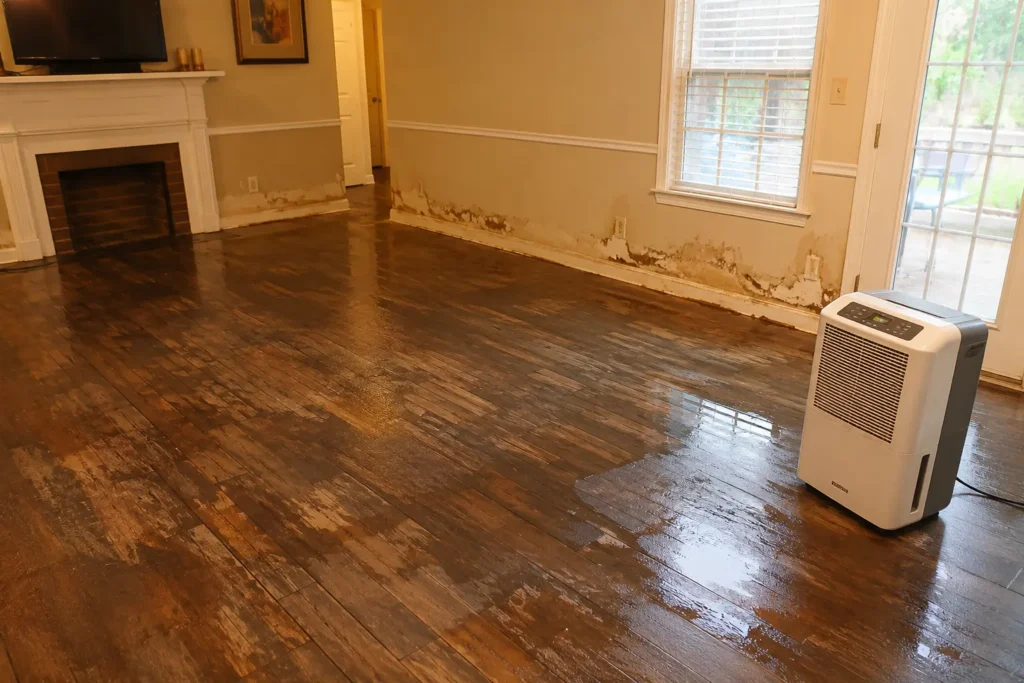
Water damage restoration cost is one of the first things homeowners search for after a flood, a burst pipe, or a storm intrusion. And the honest answer is that the number varies more than most people expect, depending on where you live, what type of water caused the damage, and how quickly you responded.
This guide covers what restoration actually costs in real terms, what drives the price up or down, and why homeowners in Southern California and central Illinois often see very different numbers for what looks like the same job on the surface.
The National Average – And Why It Rarely Applies to Your Situation
Most cost guides will tell you water damage restoration runs between $1,300 and $5,500 nationally. That range is accurate but nearly useless on its own, because the factors that push a job toward $1,300 versus $5,500 are completely different depending on your home, your region, and the source of the water.
A small pipe leak caught within an hour in a dry climate is a very different job from a basement that flooded overnight during an Illinois River surge. Both get lumped into the same national average, which is why that number rarely reflects what you’ll actually pay.
The more useful approach is understanding what drives the cost, so you can estimate where your specific situation is likely to land before anyone shows up with a quote.
What Actually Drives Water Damage Restoration Cost
Several factors have the biggest impact on your final bill:
- Water source and category – Clean water from a burst pipe is the least expensive to remediate. Greywater from appliances costs more. Blackwater from sewage backups or flooding is the most expensive because of the contamination level involved.
- Square footage affected – Restoration companies price by affected area, not total home size. A flooded 400 square foot basement costs less than water that spread through two floors of living space.
- Materials damaged – Hardwood floors, drywall, and insulation all have different replacement costs. Concrete is cheaper to dry and restore than finished hardwood. Concrete is cheaper to dry and restore than finished hardwood. The structural drying process used on each material type directly affects how many days equipment runs on site
- Response time – Every hour water sits, it spreads further and absorbs deeper into structural materials. A job started within two hours of a leak costs significantly less than the same job started 12 hours later.
- Mold presence – If mold has already started, remediation gets added to the restoration scope. According to the EPA guidelines on mold and moisture, mold can begin growing within 24 to 48 hours of water exposure, which is why response time directly affects total cost.
- Equipment required – Larger jobs need more air movers, dehumidifiers, and sometimes specialized drying equipment for crawl spaces or wall cavities.
Cost Differences Between California and Illinois – Why the Numbers Diverge
Regional factors play a bigger role in restoration pricing than most homeowners realize.
In Southern California, particularly in areas like Hollywood, the primary water damage drivers are plumbing failures, roof leaks during winter rain events, and occasional mudflow situations after wildfires loosen hillside soil. The dry climate works in homeowners’ favor, lower ambient humidity means drying equipment works faster, which reduces the number of days equipment runs on site and lowers the overall labor and equipment cost.
In Illinois, the story is different. Homeowners dealing with water damage restoration Peoria IL situations face seasonal groundwater flooding driven by the Illinois River, combined with high spring humidity that slows the drying process significantly. More equipment run time, longer drying cycles, and older housing stock with block foundations that absorb water readily all push costs higher Homeowners in this situation typically need full basement flood restoration rather than surface level cleanup alone.
The result is that a mid-sized basement water damage job in Hollywood CA might run $2,000 to $3,500, while a comparable job in Peoria IL during spring flooding season can run $3,000 to $5,500 once extended drying time and potential mold risk are factored in.
Breaking Down a Typical Restoration Invoice
Understanding what you’re actually paying for helps when reviewing quotes. A typical restoration invoice includes:
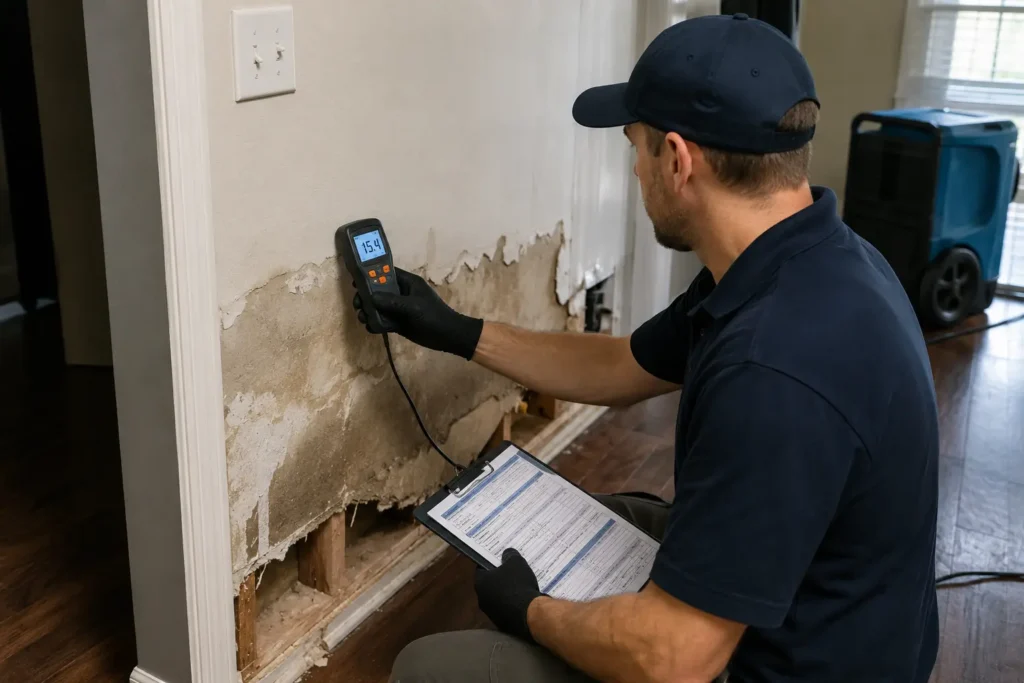
- Initial assessment and moisture mapping – Usually included in the project cost, covers moisture meter readings and documentation for insurance
- Water extraction – Truck mounted or portable pump removal of standing water
- Structural drying – Air movers and dehumidifiers running for 3 to 5 days minimum, sometimes longer in humid climates
- Antimicrobial treatment – Applied to all affected surfaces to prevent mold growth
- Material removal – Drywall, flooring, or insulation that cannot be dried in place gets removed and disposed of
- Reconstruction – Replacing removed materials, repainting, and restoring the space to pre-loss condition
Most restoration companies separate the mitigation phase, everything up to and including drying, from the reconstruction phase. Your insurance claim may cover both, or just one, depending on your policy.
Our emergency water damage restoration service covers the full mitigation scope from extraction through final drying documentation, which is what most insurance adjusters need to process a claim efficiently.
What Insurance Covers – And What It Usually Doesn’t
Homeowner’s insurance typically covers sudden and accidental water damage, a burst pipe repair situation, an appliance failure, or storm driven roof intrusion. What it almost never covers is gradual damage, a slow leak under a sink that went unnoticed for months, or flooding from an outside water source like a rising river or groundwater intrusion.
This distinction matters significantly for Illinois homeowners, because Illinois River flooding and groundwater seepage, two of the most common water damage causes in the Peoria area, are typically not covered under standard homeowner’s policies. Separate flood insurance through FEMA’s National Flood Insurance Program is what covers those events.
In California, the distinction usually comes down to whether the damage was caused by a sudden plumbing failure versus gradual moisture intrusion or mudflow, which requires separate coverage.
Knowing which category your damage falls into before you call your insurance company saves time and avoids surprises when the adjuster reviews the claim.
How to Get an Accurate Quote – What to Tell the Restoration Company
When you call for an estimate, the information that speeds up the quoting process includes:
- When the water event happened and how long water was present
- The source of the water, pipe, storm, appliance, or groundwater
- Which rooms and materials were affected
- Whether you’ve noticed any musty smell or visible discoloration
Our water damage assessment process starts with exactly this information before any equipment gets placed, because an accurate scope assessment upfront is what prevents cost surprises halfway through the job.
DIY vs Professional Restoration – Where the Cost Comparison Actually Lands
The math on DIY water damage cleanup looks appealing until you factor in what rental equipment actually costs, how long structural drying actually takes, and what happens if hidden moisture causes mold three weeks later.
A household dehumidifier running continuously costs less per day than commercial drying equipment, but it removes a fraction of the moisture. What looks dry on the surface can still have wall cavity moisture readings well above safe levels, which is exactly what leads to mold growth inside walls that shows up months later as a much larger and more expensive problem.
Our mold prevention after water damage guide covers exactly why professional drying equipment makes a cost difference over a full 12 month period, not just in the immediate aftermath.
Final Thought – The Real Cost Is Always About Response Time
Whether you’re in Hollywood CA dealing with a burst pipe or managing water damage restoration Peoria IL groundwater situations in spring, the single biggest factor controlling your final restoration cost is how quickly professional drying equipment gets on site.
Every hour adds to the affected area, increases material saturation, and moves the job closer to mold remediation territory. The difference between a $2,000 job and a $5,000 job is often just the hours between when the damage happened and when extraction started.
If you’re dealing with water damage right now, call us at (323) 996-7694, our Hollywood CA team responds 24/7 and can have equipment on site the same day.
Leave a Reply