Most homeowners picture water damage as a visible problem – a flooded basement, a puddle on the floor, a stain on the ceiling. Something you can see, mop up, and move on from. The reality is far more complicated and far more costly than that picture suggests.
Water is one of the most destructive forces a residential property can face – not because of what it does on the surface, but because of what it does inside. Inside your walls, under your floors, within your insulation, and along your structural framing, water travels silently and rapidly from the moment it enters your home. By the time visible damage appears, the hidden damage is almost always already extensive.
This guide breaks down exactly how water damage spreads through a home, what it does at each stage, and why professional restoration – not DIY drying – is the only approach that fully addresses what water leaves behind in your home’s structure.
Stage 1 – The First 30 Minutes: Faster Than You Think
Water damage begins the moment water contacts a building material. What happens in the first thirty minutes sets the stage for everything that follows:
- Drywall absorbs immediately: Standard drywall absorbs water rapidly on contact. Within minutes, moisture begins wicking upward through the paper facing and into the gypsum core – well above the visible waterline.
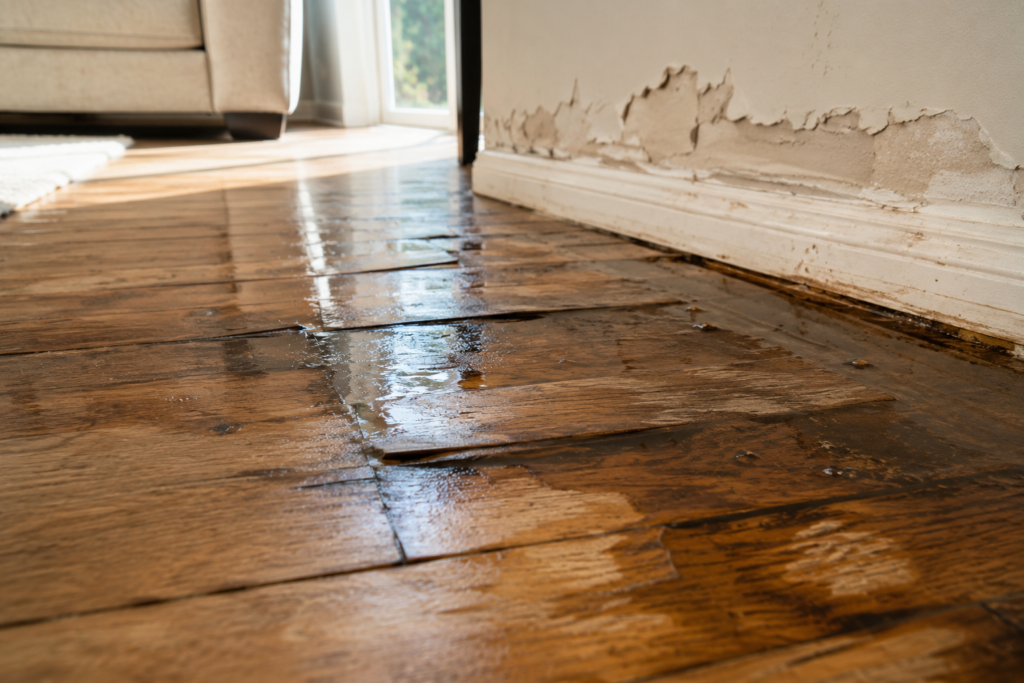
- Flooring starts failing: Hardwood floors begin to swell at the edges. Laminate flooring absorbs water through seams and begins to buckle. Tile remains intact but water flows freely into the subfloor through grout lines and edges.
- Insulation saturates: Wall and floor insulation acts like a sponge, absorbing water and holding it against adjacent structural materials continuously – preventing natural air drying and concentrating moisture where it causes the most damage.
- Water finds the path of least resistance: Water never stays where it entered. It flows along framing members, runs down wall cavities, seeps under baseboards, and travels horizontally across subfloor panels – spreading far beyond the original impact zone within the first few minutes.
This is why a burst pipe under a bathroom sink can cause water damage in a bedroom wall two rooms away. The water traveled along structural channels you cannot see from the surface.
Stage 2 – The First 24 Hours: Hidden Damage Deepens
If water damage isn’t professionally addressed within the first day, the damage profile changes significantly:
- Subfloor saturation: Water that reached subfloor panels has now been absorbed through their full thickness. Plywood subfloors swell, delaminate, and begin to lose structural integrity. OSB subfloor panels deteriorate rapidly when wet.
- Wall cavity moisture: Water that entered wall cavities is now held there by insulation – creating a wet, enclosed environment with limited air circulation that is ideal for biological growth.
- Structural wood begins absorbing: Wall studs, floor joists, and ceiling joists that came into contact with water are now actively absorbing moisture through their grain. Wood at elevated moisture content weakens over time and becomes susceptible to rot fungi.
- Metal components begin oxidizing: Fasteners, brackets, ductwork connections, and electrical boxes in the affected area begin to rust – weakening connections and creating long-term reliability concerns.
- Odors develop: The early signs of biological activity – the musty, earthy smell of wet building materials – begin to appear within 24 hours of water exposure.
For homeowners dealing with any flooding event – from a burst pipe to a backed-up drain – flood damage cleanup needs to begin within this window to prevent the damage from progressing to the next stage.
Stage 3 – 24 to 48 Hours: The Mold Clock Starts
This is the threshold that changes everything about the cost and complexity of restoration.
According to the U.S. Environmental Protection Agency (EPA), mold begins growing on wet building materials within 24 to 48 hours of water exposure. This is not a slow, gradual process – under the right conditions of moisture, warmth, and organic material (which every wood-framed home provides), mold colonies establish and begin spreading within two days of a water event.
Once mold is present inside walls and under flooring, the project scope changes from water damage restoration to water damage restoration plus mold remediation – a significantly larger and more expensive undertaking.
The 48-hour window is not a guideline. It is the hard deadline between a manageable restoration and a complex remediation project. Every hour past this threshold that structural materials remain wet increases the likelihood of mold establishment and the cost of achieving a fully clean, dry, safe home.
Stage 4 – Beyond 48 Hours: Structural and Biological Damage
When water damage goes unaddressed beyond 48 hours – whether because it wasn’t discovered, wasn’t taken seriously, or wasn’t professionally treated – the damage profile becomes significantly more severe:
- Mold colonies spread: Established mold spreads via spores to adjacent areas, appearing on surfaces beyond the originally saturated zone and penetrating deeper into porous materials.
- Wood rot begins: Structural framing at sustained elevated moisture content becomes susceptible to wood-decay fungi. Rot weakens joists, studs, and subfloor panels structurally – turning what was a restoration into a structural repair.
- Drywall becomes unsalvageable: Drywall saturated for more than 24 to 48 hours almost universally requires complete removal and replacement. There is no effective way to dry saturated drywall to a safe standard without removing it.
- Secondary rooms are affected: Moisture that migrated through structural channels has now reached adjacent rooms, creating damage in areas that appeared unaffected in the first inspection.
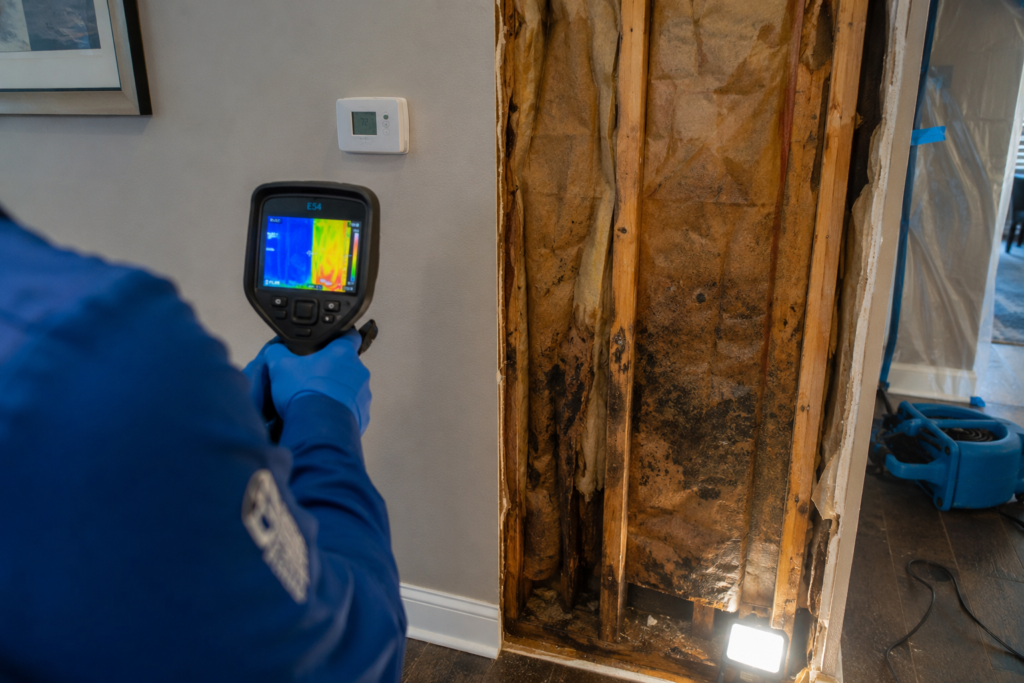
This progression is precisely why moisture detection testing using professional thermal imaging cameras and moisture meters is an essential first step in any professional restoration – finding every affected area before work begins, not discovering additional damage after walls are closed back up.
What Professional Restoration Does That DIY Cannot
Running household fans and opening windows addresses airflow at the surface only. It does not dry structural materials. Here is what professional water damage restoration actually involves:
Industrial extraction first: Professional extraction equipment removes water from flooring, carpeting, and structural materials with far greater power and depth than any consumer wet-dry vacuum. This step alone makes a significant difference in how much moisture the structural drying phase has to address.
Structural drying – not surface drying: The structural drying process uses commercial-grade air movers and dehumidifiers placed in specific configurations to create controlled airflow through wall cavities, under flooring systems, and within other enclosed structural spaces. This dries materials from the inside out – not just from the surface inward. Daily moisture meter readings track progress until all structural materials confirm safe dryness levels.
Thermal imaging for hidden moisture: Professional technicians use infrared cameras to identify temperature differentials in walls and floors that indicate moisture presence. A wall that looks and feels dry on the surface can show clear thermal evidence of wet insulation and framing behind it. This technology finds every affected area so nothing is missed.
Antimicrobial treatment: All affected surfaces receive antimicrobial treatment to eliminate bacteria and prevent mold establishment before spaces are enclosed. This step is skipped entirely in DIY approaches – and its absence is why mold appears weeks later in homes that “dried out on their own.”
For homeowners in the Boise, Idaho area dealing with water damage from any source, the team at Boise ID Water Damage provides 24/7 emergency response with professional extraction, thermal imaging, structural drying, and full restoration – handling the complete process from first call to final repair.
The Most Common Sources of Water Damage – And What Each One Means for Your Home
Understanding the source of your water damage matters because different sources create different contamination levels and different structural risk profiles:
- Burst pipes: Clean water source but high volume and sudden release – burst pipe repair must be paired with immediate professional restoration because of how rapidly clean water saturates structural materials and transitions to a contaminated state.
- Appliance failures: Washing machines, dishwashers, and water heaters release large volumes before detection. Often reaches subfloors and wall cavities before the surface even appears significantly wet.
- Roof leaks: Water enters at the roof, travels through attic insulation, and saturates ceiling framing and drywall – often spreading horizontally to areas far from the original entry point before becoming visible.
- Basement flooding: Groundwater and surface water entering basements saturates concrete, framing, stored items, and HVAC systems simultaneously – creating complex multi-material drying challenges.
- Sewage backups: Category 3 contamination requiring full protective equipment, specialized antimicrobial treatment, and careful material disposal protocols beyond standard water damage restoration.
Final Thoughts
Water damage is always more than what you can see. The visible wet area is where the event happened – the hidden damage is where the real cost accumulates. Structural saturation, concealed mold growth, and compromised framing develop silently inside your home while the surface appears to be drying out normally.
Professional water damage restoration finds the hidden damage, dries the structure completely, treats for biological growth, and documents everything for insurance – giving your home a genuine full recovery rather than a surface fix that leads to bigger problems in the months ahead.
Don’t let water damage compound inside your walls. Act fast, get professional help on site quickly, and make sure every affected area is identified and properly dried before your home is considered restored.
Leave a Reply