Flood damage restoration Charleston SC homeowners face is one of the most urgent emergencies any property owner can experience. If you have ever dealt with a flooded home, you already know that the first few hours feel like pure chaos, water spreading across floors, belongings soaking, and no idea where to even start.
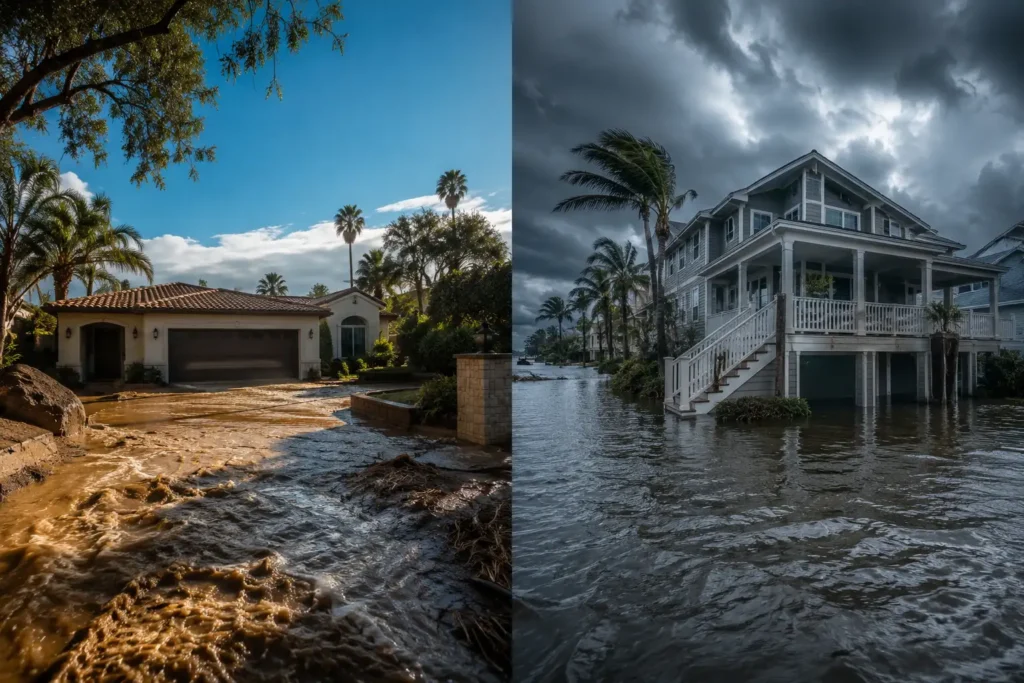
Los Angeles homeowners and Charleston, South Carolina homeowners both face serious flood damage risks, but the causes, the timelines, and the restoration process are surprisingly different. Understanding those differences is not just interesting, it can genuinely change how fast your home recovers and how much you end up paying out of pocket.
This guide breaks down exactly what sets coastal flood damage restoration apart, why location matters more than most people realize, and what every homeowner should know before disaster strikes.
Why Location Changes Everything in Flood Damage Restoration
Most people assume that water damage is water damage, get it wet, dry it out, move on. That thinking leads to serious problems down the line.
The truth is that flood water behaves differently depending on the local climate, soil type, building materials, and the source of the flooding itself. A home flooded by a burst pipe in Hollywood, California faces a completely different restoration challenge than a home hit by tidal surge in Charleston, South Carolina.
Here is what drives those differences:
- Humidity levels – Los Angeles has a dry Mediterranean climate. Once the water source is removed, natural evaporation works in your favor. Charleston sits on the Atlantic coast with year-round humidity above 70%, which means mold can begin forming inside walls within 24 to 48 hours of any water intrusion.
- Soil composition – Southern California soil drains relatively fast. The clay-heavy lowland soil around Charleston holds moisture against foundations for days after a flood event ends.
- Building materials – Older coastal homes in the Southeast are often built with wood framing that absorbs moisture deeply. Drywall in humid environments can become saturated to its core far faster than in dry climates.
- Flood source – LA flooding typically comes from atmospheric rivers, pipe failures, or hillside runoff. Charleston deals with tidal flooding, hurricane storm surge, and river overflow, all of which can carry saltwater into the home.
That last point is where things get especially serious.
The Saltwater Problem – Why Charleston SC Flood Damage Is Different
When saltwater enters a home during tidal flooding or hurricane surge, it does not just damage the surface. Salt accelerates the corrosion of metal fasteners, electrical components, and HVAC systems at a rate that freshwater flooding simply does not. It also draws moisture back into building materials even after initial drying, which is why standard drying timelines that work fine in Los Angeles are not enough in coastal South Carolina.
Charleston, SC sits where three rivers meet the Atlantic, and large portions of the city rest just a few feet above sea level. The city experiences what residents call “sunny day flooding”, tidal flooding that occurs even without any rain, simply because sea levels have risen enough to push water back up through storm drains during high tide.
Add hurricane season, June through November and Charleston becomes one of the most flood-exposed cities in the entire southeastern United States.
For homeowners in the area, getting professional flood damage restoration Charleston SC help within the first few hours is not optional. Every hour that passes with untreated saltwater sitting in wall cavities or under flooring multiplies the restoration cost significantly.
Los Angeles Flood Damage – A Different Set of Challenges
California homeowners face their own version of flood chaos, and it is no less damaging, just different.
Atmospheric river events, which have become more frequent and intense in recent years, can drop several inches of rain in a matter of hours across the greater LA area. Hillside properties face mudslide risk. Low-lying neighborhoods near the LA River deal with overflow flooding. And when wildfire-burned hillsides lose vegetation, rainwater runs off at extreme speeds and carries heavy debris loads into residential areas below.
Our team at Wise Tools Water Damage Restoration works across the Hollywood and greater Los Angeles area, and we have seen how quickly a moderate rain event can turn into a serious interior flood when drainage systems get overwhelmed or when aging pipes fail under pressure.
The good news for LA homeowners is that the dry climate works in your favor during the drying phase. With the right equipment running quickly, a well-executed restoration in Southern California can often move faster than the same job in a humid coastal city.
The bad news is that many LA homeowners underestimate how much hidden moisture gets trapped in stucco walls and under tile flooring – materials common in California construction that do not show water damage on the surface but hold moisture internally for a long time.
What Both Cities Have in Common – The 48-Hour Rule
Despite all these differences, one rule applies equally to homes in Los Angeles, Charleston, and everywhere in between: the first 48 hours after a flood event determine most of the final restoration cost.
According to FEMA flood damage guidelines, delayed response is the single biggest factor that turns a manageable water damage claim into a catastrophic structural loss. Mold, structural weakening, and secondary contamination all accelerate sharply after the 48-hour mark.
Here is what every homeowner should do immediately after discovering flood damage, regardless of location:
- Shut off the main water supply if the flooding is from a plumbing failure
- Turn off power to any room with standing water before entering
- Photograph and video document everything before touching or moving a single item
- Move valuables and furniture off wet floors if it is safe to do so
- Call a certified restoration professional – not tomorrow, not after the weekend
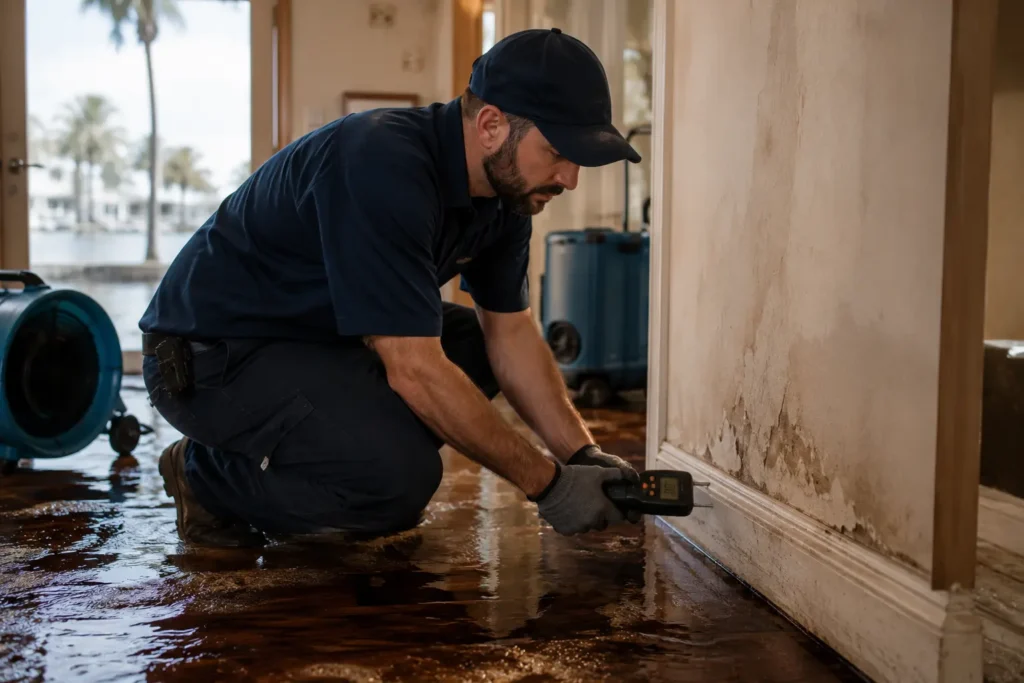
That last step is the most important one. Restoration companies with proper industrial drying equipment, moisture meters, and certified technicians will always outperform DIY efforts on any significant flood event.
If you are dealing with flood damage in the Hollywood or Los Angeles area, our sewage contamination cleanup and restoration services are available around the clock. We use thermal imaging and industrial dehumidification to find and eliminate moisture that is completely invisible to the naked eye.
Choosing the Right Restoration Company – Questions Worth Asking
Not every restoration company is set up to handle the specific type of flood damage your home has experienced. Before you agree to any work, ask these questions directly:
- Do they carry current IICRC certification? This is the industry gold standard for water damage and restoration professionals.
- Have they handled your specific flood type before – coastal saltwater surge, atmospheric river runoff, or pipe failure?
- Do they provide a written scope of work with itemized costs before starting?
- Are they genuinely available 24 hours a day, including weekends and holidays?
A company that cannot answer yes to all four of those questions is not the right company for a serious flood event.
For Los Angeles homeowners, check our flood damage cleanup services to see how we handle every type of flood event across the Hollywood area. For coastal South Carolina homeowners dealing with tidal or hurricane flooding, make sure the company you hire has direct experience with saltwater intrusion, it is a specialized situation that not every restoration crew is trained to handle correctly.
Final Thought – Fast Action, Right Partner
Flood damage restoration is not a job for waiting. Every additional hour of moisture exposure inside your walls, floors, and structural framing increases your repair bill and increases health risks from mold exposure.
Whether you are in Los Angeles managing storm runoff damage or on the South Carolina coast dealing with a hurricane aftermath, the answer is always the same: document everything, call a certified professional immediately, and do not let anyone start work without a written estimate in hand.
For immediate help in the Hollywood and greater LA area, contact our emergency flood response team or call us directly at (323) 996-7694, we are available 24 hours a day and arrive ready to work.
Leave a Reply